We Don’t Go to Bed Angry, That’s the Rule

Judith Peck, Ed.D.

We Don’t Go to Bed Angry, that’s the Rule

We don’t go to bed angry, that’s the rule. It’s curious about rules. Rules are conceptually external to yourself and to others. Set apart from the particulars of events and situations, they stand like heavy stone pillars surrounding the tumultuous interior where emotions rein.
Irate as each of us were, my 12-year old daughter and me—and I can’t even remember the argument—she quoted the rule to me as she lay in her bed, her outgrown stuffed animals, not a one discarded, taking up room around her.
“No, we can’t,” I agreed, though it took me a moment, sitting on the edge of the bed, tense and annoyed.
The matter itself was not resolved and each of us knew it, an unfairness of some sort, which lay at the foundation of family disputes: favors extended to a sibling, a denial of privilege, a perceived refusal to understand, a broken promise. Whatever the infliction of emotional pain one on the other, the rule made it necessary to wait until the morning for further discussion.
The matter ended for the night with a hug. In fairness to the truth, one probably hugged more than the other, but lumpy or limp the hug reinforced the rule.
A curious thing about hugs. The contact of bodies, embrace of arms, touch of a cool cheek on one’s own—again, the external quiets the turmoil of the inner.
Never is such quietude needed more than at the transition time between day and sleep. The day has brought its own unexpected doings, excitements, angst, twists and turns requiring action and resources brought to bear. The night’s sleep brings the needed rest in which dreams can work in peace to expel in their own wildly creative ways, the trash that clutter the mind, clearing it at least enough to welcome the next day’s surprises.
The transition at bedtime between the dramatic enactments of the day and the curtain closing on night is, for all its seeming insignificance with so little happening, time well spent if spent well. Being read to before sleep in the early years and reading yourself in the forever years after is time well spent. Giving credence to the rule, we don’t go to bed angry is a mission well spent. The rule applies not only to the miss-speak or miss-deeds of others, but to anger addressed to yourself. For anger at yourself is the most vicious and least forgiving.
With a physical hug or an implied one, the rule abides, putting off until morning the effortful anger, allowing dreams to roll in and do their work to exhume the stuff not needed and soften the biting hurts and clear the way to embrace the day. SmartStartsintheArts.com
Posted in Blogs | Comments Off on We Don’t Go to Bed Angry, That’s the Rule

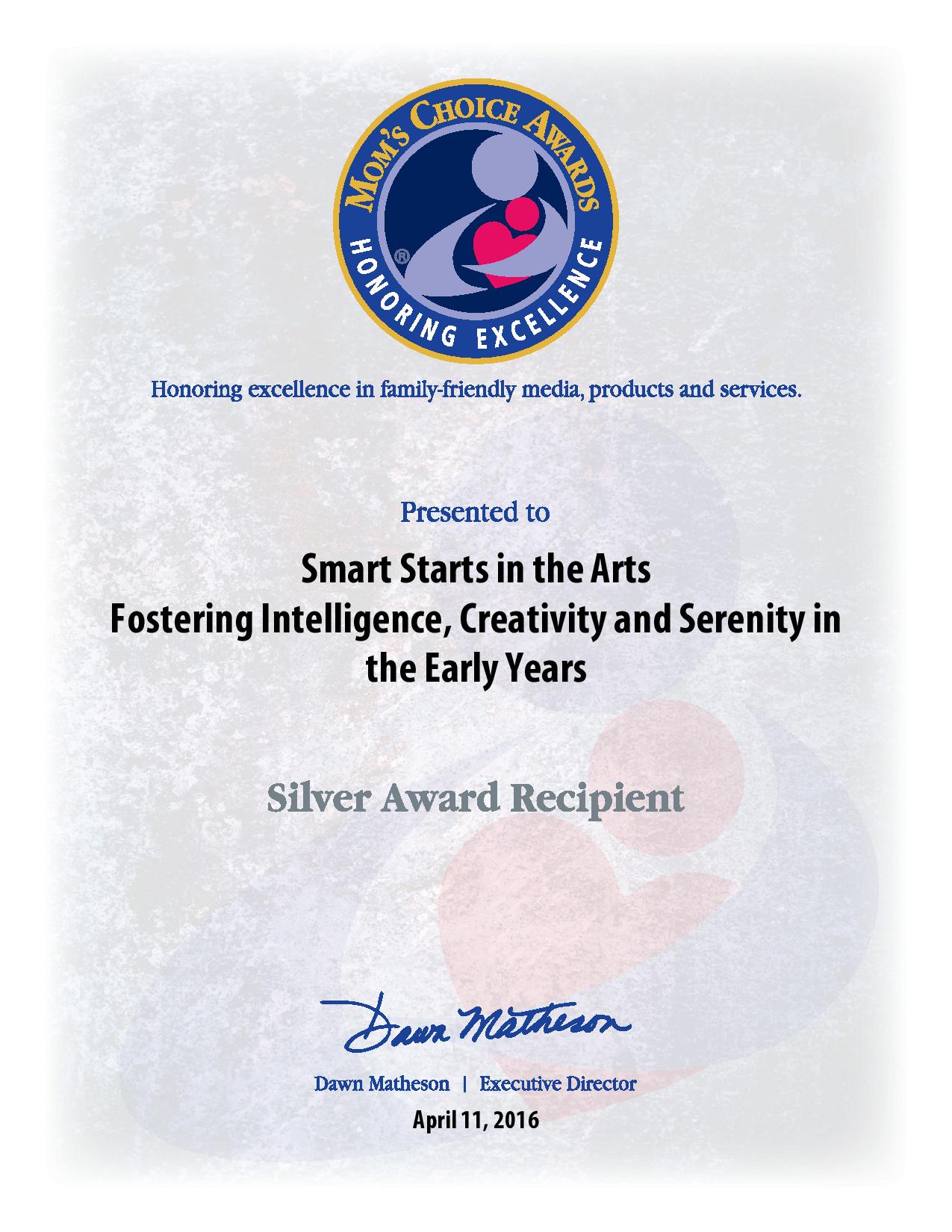
Mom’s Choice Award

I am pleased that my book for new parents, Smart Starts in the Arts, has received this prestigious award. www.SmartStartsintheArts.com
award 2-page-001

Posted in Updates | Leave a comment

Mom’s thoughtful advice to daughter on wrong boyfriend

Judith Peck, Ed.D.

Sitting opposite my daughter in a luncheonette after finally meeting the surly guy she’d begun living with, I made a little sigh in praise of coffee. As long as we could drink coffee together all was not lost.
She looked at me and smiled, a little warily. “It was nice that you came up, Mom, I know you’re busy. You really don’t have to worry about me though, you know.” She tossed her head as if to shake off such concern; her hair, just washed, glistened with the sunlight coming through the windows, the bright light highlighting a thousand curls. When she was little, those incorrigible curls would frolic as she danced around the living room or demonstrated her latest tricks, daring feats like jumping over two dolls in a row. Now, disciplined by blow dryers, steam curlers and curling irons, her tresses behaved.
“You don’t like Barker, do you?”
“He doesn’t offer me much to like. Do you like him, that’s more to the point?” And why, I wanted to add but didn’t.
“I love him, Mom. He’s absolutely brilliant. People don’t understand him, that’s why they don’t like him.”
“What people are you talking about?”
“Oh, the guys on the magazine. They’re jealous of his talent. And my suite-mates … well, that’s why I ended up leaving the dorm. Belinda had a blow-out with him that almost came to fists and Esther stood up for her. He convinced me it wasn’t worth my energy to make up with them. You want another coffee? I do.”
“Sure.” I watched her walk up to the luncheonette counter, her bouncy gait, the loose swing of her bag over her shoulder. I noticed she had lost more weight. She was getting close to that long ago emaciated look that scared me so.
“You’re thinner, are you dieting again?” I asked as she slowly placed the cups down, careful not to tip the flimsy containers.
“Oh yeah, isn’t it great? Barker said I was too fat and it was just the encouragement I needed. I’ve lost six pounds. We eat a lot of fish and broccoli.”
“You don’t eat at Quincy House, on your meal plan?”
“Oh lunch, yeah, but not dinner and I don’t eat breakfast anymore. Barker makes the meals, he doesn’t like the way I cook. He won’t eat at Quincy anymore with all those elitist jerks. He’s leaving Quincy next semester anyway for the Quad. Wants to be a loner there, a floater. Roommates give him a pain in the butt.”
“Cara,” I began, these fresh mortifications bolstering my attack. I paused and prepared to talk slowly, not my usual style, more like that of a thoughtful lawyer whose measured talk conveys the weighted importance of each syllable (though one can’t ignore that lawyers bill by the hour). This observation seems funny to me so I smile. Cara smiles back as an almost automatic response. Women are less suspicious than men about these facial expressions from nowhere. “I know you must see something in Barker I don’t see,” I say at length. We sipped our coffee and I looked up at her. “I mean, after all, you know him better and I’m sure he’s different with you than with me … and maybe with all those others too you said don’t like him, that he fights with.”
She received this without batting an eye which further demonstrated to me what an all-round dislikable creep he was.
“I’m not going to tell you that I don’t like him much either, and I think you should move back into your dorm and forget him. I accept that you like him. I even accept,” and here I had to take a breath before finishing the sentence, “that you’re in love with him.”
“Oh, you would like him too, Mom, if you really got to know him. It’s just that he’s …-well, so smart, he has no patience for stupid people and –”
“I’m not stupid, Cara, and he’s never even talked to me.”
“Oh, of course you’re not. I don’t mean that, I mean the others … Oh, I don’t know what I mean.”
“Okay, just listen to me now, Cara, I want to tell you something and it doesn’t have to do with who Barker likes or doesn’t like or who likes him. It has to do with you. You love him, let’s start there.”
She was looking at me steadily now. We were on the same team, the same side.
“It’s okay to love someone that others don’t and to not care whether they like him or not. It’s okay to want to give to someone you love, to give yourself, that’s okay too; it’s what love wants to do.” I stopped and gulped more coffee, trying to be careful, not rush, hoping she would stay with me and not push me away in a pique. Oh, how I loved this child of mine! And how urgently I wanted us to see together some clarity across the distance and find some helpful direction that she would be willing to take.
“It’s okay to give yourself,” I repeated, leaning forward and bringing my face closer to her. I was in her space, her bubble. But she had long ago put herself in mine. “What you must never do, though, Cara, is give away yourself. To anyone.”
“I don’t know what you mean.” She was perplexed but interested, at least that.
“Look, Cara, you don’t believe it now, but Barker might not be the only man to come into your life. You might become attracted to another man after him or even several men in time, you’re very young. Don’t give away that part of you that stands alone and apart from this man or any man. Of course you’re influenced by Barker, just like you sometimes listen to what I say or Dad or your teachers, your friends. Okay, your perception of yourself isn’t fixed. Barker says you’re this or that and you believe him so you accept that you’re this or that …fat, bright, stupid, on the right track, the wrong track, but that’s not truth, not my truth, certainly. It’s Barker’s truth for you at a time and a state of mind in Barker’s life.
“None of us is you, Cara, none of us. So don’t give your sense of self to him or anyone—me, Dad, not even to the man you marry. Do you understand what I’m saying, Cara? Barker can never really hurt you if you hold onto that.”
I reached out across the table because I had to touch her and I was a little surprised and a lot grateful that she didn’t move her arm away. I was leaning towards her and although she sat stiffly, she still looked at me as if she’d never seen me before and I suppose the way we were engaged with each other was new, locking eyes, not fussing with our hair or our napkins or spoons. I was encouraged enough by this to go on. “It’s easy to give yourself away with certain men. You almost want to when you’re in love and they’re ready to take it. We can take it from them too, maybe not as easily the way things are, but we can be greedy as well. And if a man—I  don’t insist this is Barker’s way, but it might be—can’t be satisfied, can’t love you unless he has that last gift, that signing over of yourself, that emptying of your coffers to fill his own … then leave him.”
“Oh Mom!” She disengaged her hand and leaned back in her chair.
“Better that than leaving yourself to him.” I wasn’t stopping, not until I had said it all, hoping this, at least, could reach her through the murky haze in which Barker floated to her like some supreme God of the Intellect.
“Because after that, you’re left with nothing.”

Posted in Blog Post, Blogs, Books | Leave a comment

Loneliness

Judith Peck, Ed.D.

All life’s passions, lofty, lowly, beatific and bodily arise from one source: Loneliness. Think sex, art, sex, charity, shopping… The desire, need, sometimes compulsion to do these things, if taken to their source seems to derive from the desire to connect with someone, to be a part of something. A sense that your self alone is insufficient in its most benign state and perhaps starved in a more extreme case when loneliness feels toxic.

This is not a bad thing. We are social creatures and often do not recognize how needy we are for companionship. A good conversation—with provocative give and take, shared speaking and listening—can make you feel as fulfilled as if you’d seen a terrific play. It holds the drama, sequence of action, insights and fresh understanding that comes with good theatre but even more unique in the originality of its source.

Loneliness is assuaged by seeing something profound  in a work of art. You feel some bonding with the maker of the image even if you never see the name of the artist. Something similar happens when you are enraptured by music. No wonder you want to grasp the hand of the person next to you at such a moment. It is a passionate feeling to lose the sense of loneliness and feel connection. A connection to nature can provide such a feeling too.

In sexual contact, you strive for a sense of true bonding, one human to another, body and soul. It happens sometimes. Sorrowfully, we are continually disappointed when such heralded expectations go unfulfilled, as usually happens.

As humans, we substitute culture in many forms to fill the gaps, surrounding ourselves with pets or possessions or conquests in its many diverse forms, and that’s to the good. Think what a desert we would inhabit if these quests were not there. But recognizing that we are lonely creatures when we are solitary and that this is normal can help, not only in making us feel better about that painful feeling “I don’t belong,” but push us toward all those other wonderful things out there that simulate belonging so effectively. Seeing in the Dark, Arielle’s Story

Posted in Blog Post, Blogs, Books | Leave a comment

Empathy

Judith Peck, Ed.D.

So what was it about him that made me fall in love with him, and fall is what we do with love relationships, like trip or stumble, or roll head over heels; something precarious. It felt like an accident, surely something I didn’t plan on. Well, he was interesting; not a boring thing about him, always something new and challenging being with him. No, not that or why not go to the library and find an intriguing character you can spend a week with and then toss in the return bin? It could be because I myself felt intriguing being with him. He was so mercurial I had to keep changing right along to keep up; he kept me sharp and I must have liked that or thought I did. And he was good looking, but ordinary tall, dark and handsome, no exceptional wow components, excepting maybe his eyes which were too intense to look at for long if they were on you. Stuart was smart and made me feel smart; he was a good lover too and made me feel not loved but beautiful and that’s what a woman needs to feel with a man in the dark. But finally, if it came right down to it, the hook that brought me to him and kept me there was empathy. Yes, empathy, because like it or not, I seemed to get right in there with him, taking on his regrets, his terror; I shared the darkness of his days and the unforgiving nights. There’s no escaping empathy. It’s the most human of virtues; I don’t know how I got it and I wish to hell I never did. Seeinginthedark

Posted in Blog Post, Blogs, Books | Leave a comment

Happiness Enters through the Senses

Judith Peck, Ed.D.

A feeling of happiness comes not from a state of mind but impression of the senses. Happiness enters from sight, sound, taste, smell or touch  and only later is the mind’s awareness. Nature affords this nutrition for the senses, which is just as necessary for a state of well being as the nutrients of food and drink for the body. I first understood this when I was in a position to feel all five of these remarkable ingredients and in those moments was aware of an intense sensation of happiness.

Sitting in a comfortable chair in an exquisite room decorated by the wife, an artist, sipping a glass of excellent red wine, home-made by the husband, while music by Prokovioff was played magnificently on the piano, I was effused with a sensation of complete happiness. I realized suddenly that this state of being, so complete in its lack of tension or negativity came as a result of the fulfillment of all five senses at once.

Why should it come as a surprise that nature requires us to feed the senses just as we understand we must feed the body?  That this plentiful bounty for the senses is provided in nature, just as it is provided in nature’s resources of food and water, should equally come as no surprise.

Sitting outside, if there are no unsightly distractions, abrasive sounds, offensive smells,  too cold or too hot or too rough sensations to the body, you can feast on nature. There is so much to take in: the shapes of tree branches against the sky, the infinite varieties of the color green, the color of sky, the sight of a squirrel performing hi-wire tricks without a net, the sound of the wind through the trees, the caress of the breeze, the smell of flowers.

Of course, just as in every other excess in which we humans involve ourselves, we can over-do each of these sensations: Engage in too much, too instantaneous sight-indulgence watching TV or addicted to digital devices; listen too steadily and abrasively to music excessively loud and noise-related; eat too much and drink too much; caress too much, sniff too much of ingredients that take us further away from the rich world we inhabit and which provides more than we could ever consume. The arts – each of them: dance, drama, visual art, music – depend in their individual ways on their audience’s sensual consumption.

Being aware of the nutrients needed for healthy happiness is a start. Finding the plentitude all around is easy, just look, listen, taste, pick up the scent, feel the touch and go for it. Seeing in the Dark, Arielle’s Story

Posted in Blog Post, Blogs, Books | Leave a comment

Verbal Abuse

Judith Peck, Ed.D.

I took a stand, told him that heavy hands would not be tolerated, but I did not cry, I did not whine, I did not consider leaving him, at least for more than an overnight. I was an electrical engineer, a competent professional, a nurturing mother and intelligent wife. I could handle this. The incidents left no lasting effects upon me and he loved me, he just couldn’t help himself. And it was not in my nature to throw a pot, dish, a teaspoon. But I was becoming aware how routinely I kept up my guard and how long gone normal frivolity had become.

Stuart’s vocabulary began to grow in ferocity and in color. The combinations became more loaded and more ridiculous as well. “Oh, why don’t you just go fuck yourself?” he suggested. That argument was about a wasted trip to the movies when the paper listed the show times incorrectly and I hadn’t re-checked by phoning.

“Just how do you propose I go about doing that?” I responded in a curious voice, smothering with facile banter the girl-child holding out her arms, crying Love me … The next day with temper cooled, I would try to conduct a calm discourse. “Please don’t say ugly things to me, Stuart, those curse words.”

“They’re words,” he would reply, “that’s all. They don’t mean a thing.”

“But most of what’s between us is words,” I argued, my voice whining in spite of my sensible thoughts, “It’s how we communicate.”

“They don’t mean anything, just steam,” he insisted. He was being patient with me.

“Stuart, we don’t make bird calls, we don’t bark or grunt, we choose words and utter them for a purpose.” I was lecturing now, really hitting the pits. “Your words hurt me like stones thrown in my face. They mean everything.”

“Oh, c’mon, Ari, get off it, will you?” he snapped, striding out of the room. An accusatory tone was his exit bell. Whines he tolerated well.

I recall one day Todd broke his banana in half and in a tantrum demanded that I glue it back together. Discussing with him later the nature of bananas and what neither a mother nor all the king’s horses nor all the king’s men could fix, and how when he ate a banana it would all break up inside him anyway was enough to satisfy him. Todd could agree that he needn’t have been so upset. But Stuart, older, wiser and busier, had no use for looking back. He had no need to; I was doing the looking back for both of us. I was in charge of our marriage like he was in charge of cleaning out the garage. Seeing in the Dark, Arielle’s Story

Posted in Blog Post, Blogs, Books | Leave a comment

Odd Bi-product of Infidelity

Judith Peck, Ed.D.

An unusual bi-product of infidelity is renewed interest in your husband, unless the infidelity is on-going, in which case sex with a spouse has the opposite effect. Whether it was a charged up sense of my womanliness or the guilt of “straying” and wanting to make it up to Stuart or a newly discovered eroticism running through my veins, I don’t know. But I seemed to be turned on all day, so much so that a breeze against my cheek or the car’s motion under my hips or just seeing something beautiful—a deer, a blue jay, a flight of geese in perfect formation—could make me flush and think of bed and Stuart … yes, Stuart, of pleasing him and using my affair with Charles to do it. I wanted to keep Charles flowing in my veins — for Stuart. Seeing in the Dark, Arielle’s Story

Posted in Blog Post, Blogs, Books | Leave a comment

Arielle talks with her college-age daughter about love

Judith Peck, Ed.D.

Arielle talks to her 18-year old daughter, Cara, who has moved from her dorm to live with a brilliant but surly young man in a passage from Seeing in the Dark, Arielle’s Story:

I paused and prepared to talk slowly, not my usual style, more like that of a lawyer whose measured talk conveys the weighted importance of each syllable (though one can’t ignore that lawyers bill by the hour, the observation  funny to me so I smile.) Cara smiles back, almost automatically; women are less suspicious than men about facial expressions from nowhere. “I know you must see something in Barker I don’t see,” I say at length. We sipped our coffee and I looked up at her. “I mean, after all, you know him better and I’m sure he’s different with you than with me … and maybe with all those others, too, you said don’t like him, that he fights with.”

She received this without batting an eye which further demonstrated to me what an all-round dislikable creep he was.

“I’m not going to tell you that I don’t like him much either and I think you should forget him. I accept that you like him. I even accept–” and here I had to take a breath, “that you’re in love with him.”

“Oh, you would like him too, Mom, if you really got to know him. It’s just that he’s so smart he has no patience for stupid people and –”

“I’m not stupid, Cara, and he’s never even talked to me.”

“Oh, of course you’re not. I mean the others … Oh, I don’t know what I mean.”

“Okay, just listen to me now, Cara, I want to tell you something and it doesn’t have to do with who Barker likes or who likes him. It has to do with you. You love him, let’s start there.”

She was looking at me steadily now. We were on the same team, the same side.

“It’s okay to love someone that others don’t. It’s okay to want to give to someone you love, to give yourself, that’s okay too; it’s what love wants to do.” I stopped and gulped more coffee, trying to be careful, not rush, hoping she would stay with me and not push me away in a pique. Oh, how I loved this child of mine! And now how urgently I wanted us to see together some clarity across the distance and find some helpful direction that she would be able to take.

“It’s okay to give yourself,” I repeated, leaning forward and bringing my face closer to her. I was in her space, her bubble. But she had long ago put herself in mine. “What you must never do, though, Cara, is give away yourself. To anyone.”

“I don’t know what you mean.” She was perplexed but interested, at least that.

“Look, Cara, you don’t believe it now, but Barker might not be the only man to come into your life. You might become attracted to another man after him or even several men in time, you’re very young. Don’t give away that part of you that stands alone and apart from this man or any man. Of course you’re influenced by Barker, just like you sometimes listen to what I say or Dad or your teachers, your friends. Okay, your perception of yourself isn’t fixed. Barker says you’re this or that and you believe him so you accept that you’re this or that …fat, bright, stupid, on the right track, the wrong track, but that’s not truth, not my truth, certainly. It’s Barker’s truth for you at a time and a state of mind in Barker’s life.

“None of us is you, Cara, none of us. So don’t give your sense of self to him or anyone—me, Dad, not even to the man you marry. Do you understand what I’m saying, Cara? Barker can never really hurt you if you hold onto that.”  Seeing in the Dark, Arielle’s Story

Posted in Blog Post, Blogs, Books | Leave a comment

Soccer Mom Turns Ref

Judith Peck, Ed.D.

With her 11-year old son only wait-listed for the team, Mom was given a choice: they needed referees, volunteers who would go out there in the wind and the chill, weathering not only nature but a ball glancing off the head, a kick in the shin, a trampled foot — inevitable in a field of scampering boys on the cusp of victory — let alone the shriek of hysterical parents howling on the sidelines. By volunteering for this sacrificial duty, her son would be in. Perhaps five minutes of thought was given to this invitation — or one.

She was provided a study manual. Conscientious as the young mother was and a fast learner, she studied hard and quick, arrived in sweats and sneaks early in the morning on time, took the test and aced it but for one question, confusingly posed: what would you do after a team player got injured? several a.b.c. choices after getting the bloody kid off the field, including stopping the game, injecting a substitute player but if not possible, playing with one side short. Playing short turned out to be it. She viewed this as psychiatric injury adding to the physical to leave his teammates short-changed, but figured she had time down the road to change things.

So she ran around the gym for four hours learning the moves and the lingo and went home exhausted carrying a uniform, a name tag and a couple of colored flags. She opted out of the afternoon session to be a Big Kids Ref. This was enough. Her son was IN and she had a shiny whistle and the title “Referee” to add to her resume. Smart Starts in the Arts

Posted in Blog Post, Blogs, Books | Leave a comment